Hibiscus Health: Proposing an oral-health screening strategy
Graduate case competition · First-place team proposal
Stage: Johns Hopkins Graduate Consulting Club 2024 case competition. The team developed a product and business-model proposal; this case does not establish clinical validation or deployment of the proposed screening capability.
The competition challenge
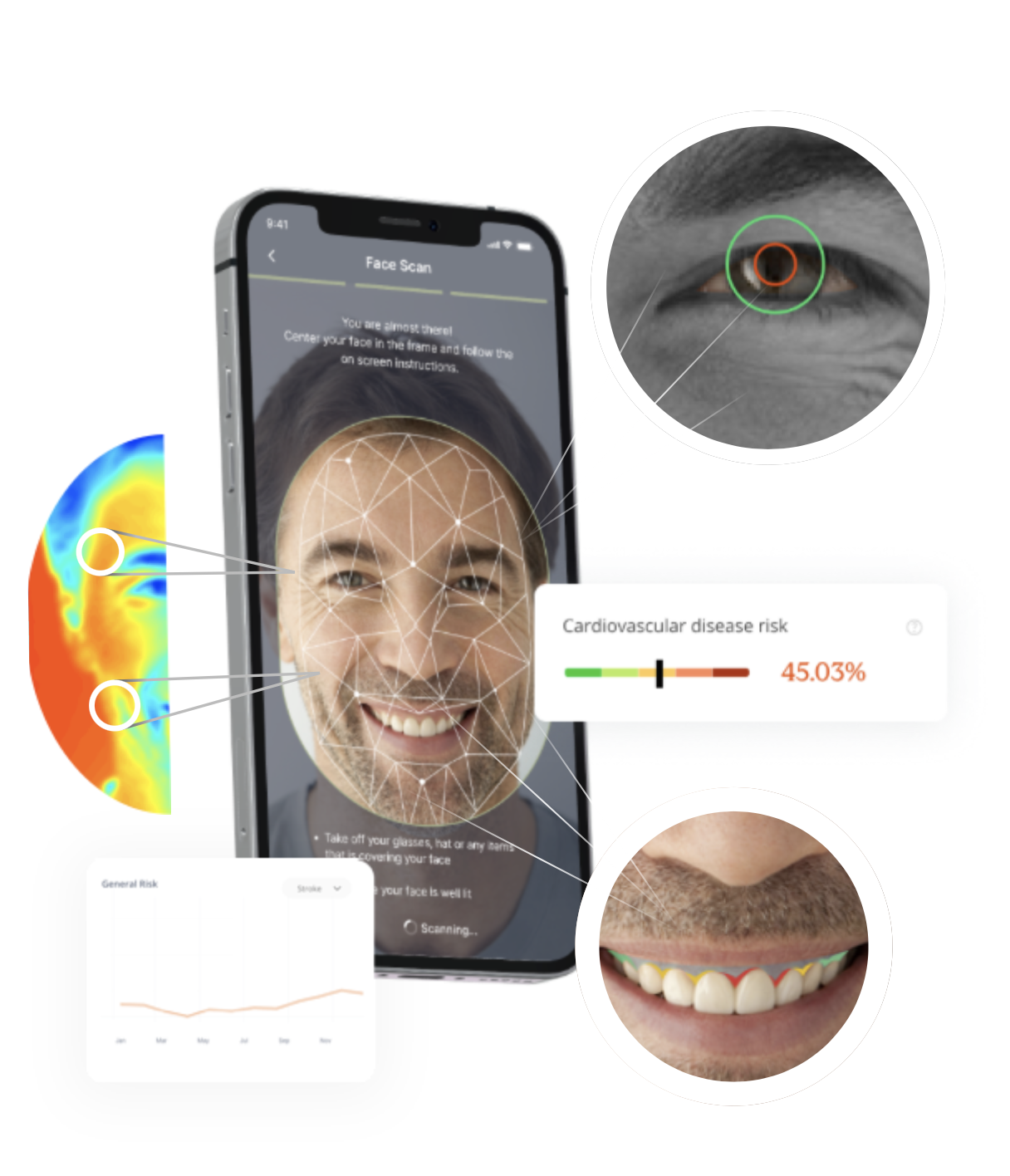
The case centered on Hibiscus Health’s smartphone-based facial-screening technology and an accuracy limitation across skin tones described in the competition brief. The challenge was to propose a response to that accessibility problem and a viable strategy for the digital-health market.
My team proposed expanding beyond facial scanning to oral-cavity analysis, drawing on the connection between periodontal disease and metabolic conditions. “Smile scanning” was a product hypothesis intended to address the skin-tone limitation; the competition work did not establish that it solved the problem. We paired the concept with a go-to-market strategy for patients, providers, and payers.
My role
Assessed 12+ facial-scanning and metabolic-screening platforms, using Jobs-to-be-Done analysis to identify market gaps and inform the proposed oral-health concept
Proposed a dual-pathway concept combining photoplethysmography (PPG) signal analysis with computer vision for “smile scanning,” informed by periodontal and metabolic disease research
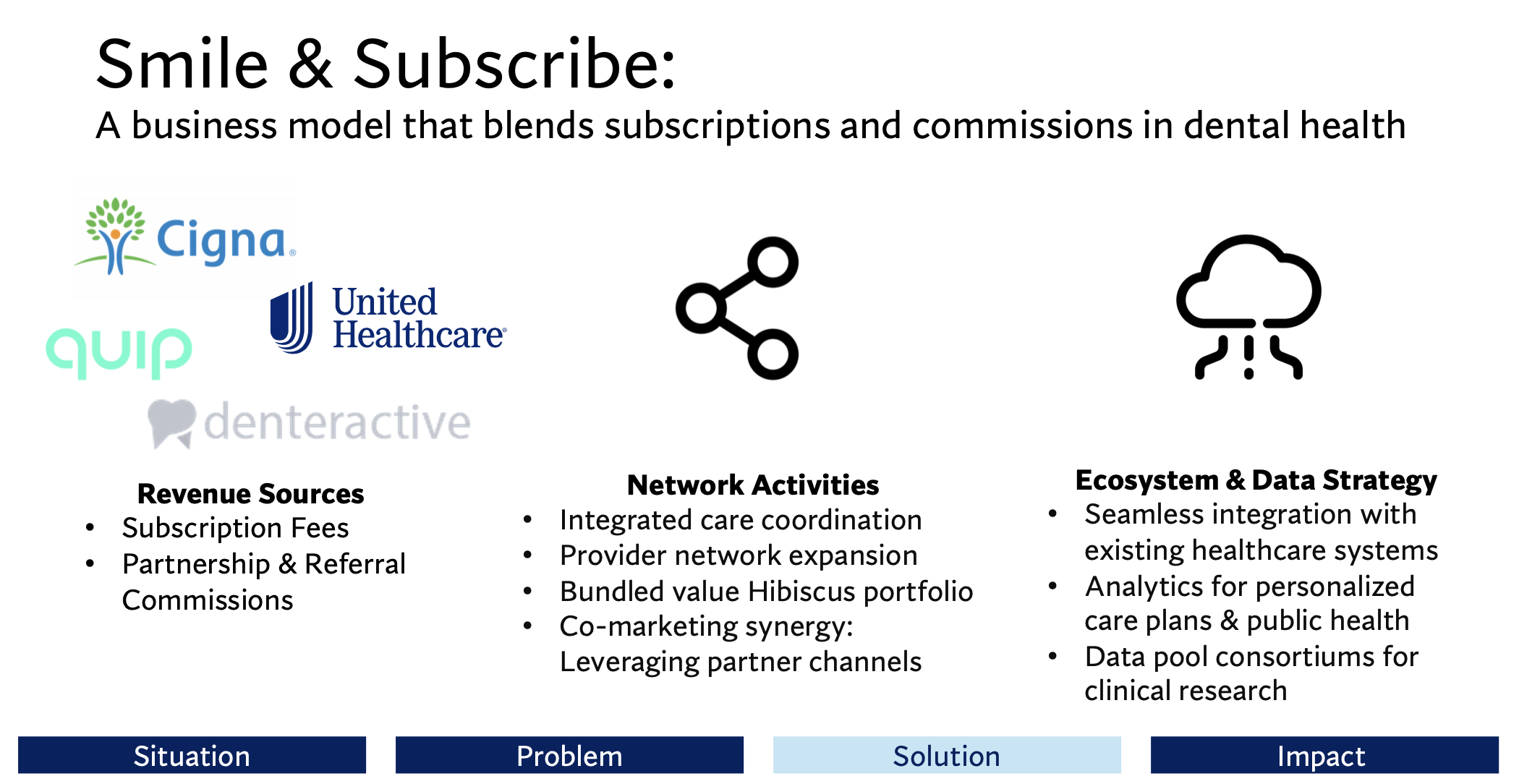
Developed the “Smile & Subscribe” business-model proposal through subscription-pricing analysis and potential referral-partnership revenue streams
Developed a five-year financial model using a 5% revenue-capture assumption and estimating a $1.65 million funding requirement for the proposed expansion
Competition result and projected benefits
Hibiscus Health adopted core recommendations from the winning strategy. This does not establish clinical validation or deployment of the proposed oral-health screening capability.
First-place victory at Johns Hopkins Graduate Consulting Club 2024 Annual Case Competition
The competition model projected $1.2 billion in cumulative healthcare savings over five years and a 90% reduction in preventable periodontal cases among 32.8 million prediabetic adults aged 18–44. These are model projections, not observed health or financial outcomes.
Proposed an oral-health differentiation strategy; the case does not establish a first-to-market launch or an IP-protected market position
Concept and business-model artifacts